
FAF Improves Team AI Collaboration
Artificial intelligence development has become increasingly collaborative, requiring multiple teams, tools, and systems to work together in real time. However, coordination challenges often arise when context is scattered, communication is inconsistent, and AI workflows lack structure. FAF improves team AI collaboration by creating a unified context system that aligns developers, enhances communication, and ensures every AI-driven process operates with shared understanding and consistency across teams.
Challenges in AI Team Collaboration
Fragmented Communication Channels
Development teams often rely on multiple communication tools that do not integrate with AI workflows. This fragmentation leads to missed updates, inconsistent instructions, and delayed decision-making. FAF reduces this issue by aligning communication with structured context layers that keep all teams synchronized in real time.
Inconsistent Context Sharing
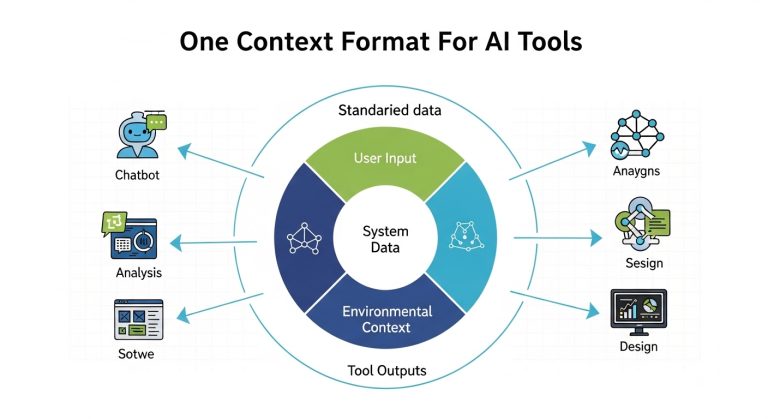
When teams share AI context manually, inconsistencies frequently occur. Different interpretations of prompts or data create conflicting outputs in AI systems. FAF solves this by standardizing context formats, ensuring every team member works with the same structured and validated information across projects.
Cross Team Misalignment
Large AI projects often involve data scientists, developers, and product teams working independently. Without alignment, objectives drift and results become inconsistent. FAF improves coordination by maintaining a shared contextual foundation that keeps all teams aligned on goals, instructions, and system behavior.
Delayed Feedback Loops
Slow feedback cycles can reduce the efficiency of AI development. Teams may take too long to evaluate outputs and adjust context. FAF accelerates feedback loops by enabling real-time context updates, helping teams respond faster and improve AI performance continuously.
Difficulty in Scaling Collaboration
As teams grow, maintaining collaboration becomes more complex. More contributors mean more context variations and communication gaps. FAF provides scalable collaboration structures that support large teams without losing clarity, consistency, or operational efficiency.
FAF Collaboration Framework
Unified Context Layer
The unified context layer ensures all teams access the same structured AI context. This eliminates confusion and ensures consistent interpretation of instructions. It acts as a central source of truth that improves alignment and reduces communication errors across teams.
Shared Knowledge Environment
FAF creates a shared environment where contextual knowledge is stored and accessed by all contributors. This enables developers, engineers, and analysts to work with the same information, improving transparency and reducing duplication of effort across projects.
Role-Based Access System
Different team members require different levels of access to AI context. FAF defines clear roles that control what users can view or modify. This improves security while ensuring each contributor has the right level of information needed for their tasks.
Real-Time Synchronization Engine
The synchronization engine ensures that any changes to AI context are instantly reflected across all systems. This prevents outdated information from being used and ensures that all teams remain aligned even during fast-moving development cycles.
Collaborative Workflow Mapping
FAF maps workflows across teams to ensure every stage of AI development is connected. This structured mapping improves visibility, reduces bottlenecks, and ensures smooth transitions between tasks performed by different teams.
Benefits of FAF for Team Collaboration
Improved Communication Efficiency
FAF enhances communication by embedding context directly into workflows. Teams no longer rely solely on external messaging tools, as relevant information is already structured within the system, reducing misunderstandings and improving clarity.
Stronger Team Alignment
When all contributors work with unified context, alignment naturally improves. FAF ensures that everyone understands the same objectives, reducing conflicts and improving coordination across technical and non-technical teams.
Faster Decision Making
Access to real-time, structured context allows teams to make faster decisions. FAF reduces delays caused by searching for information or clarifying instructions, enabling quicker responses during development cycles.
Reduced Collaboration Errors
Miscommunication is a common cause of errors in AI projects. FAF minimizes these issues by standardizing context delivery, ensuring that all teams interpret information in the same way, reducing mistakes and rework.
Increased Productivity Across Teams
By simplifying collaboration and reducing friction, FAF allows teams to focus more on building and improving AI systems. This leads to higher productivity and more efficient use of engineering resources.
FAF Collaboration Architecture Overview
| Component | Function | Collaboration Impact |
|---|---|---|
| Unified Context Layer | Centralizes AI context | Ensures consistency |
| Shared Knowledge Base | Stores team information | Improves transparency |
| Role-Based Access | Controls permissions | Enhances security |
| Sync Engine | Updates context in real time | Prevents misalignment |
| Workflow Mapper | Connects team processes | Reduces bottlenecks |
AI Collaboration in Development Workflows
Cross Functional Team Integration
FAF supports collaboration between developers, data scientists, and product managers by providing a shared context system. This integration ensures that all roles contribute effectively without losing alignment on project goals.
Streamlined Model Development
Model development becomes more efficient when teams share structured context. FAF ensures that training data, prompts, and instructions remain consistent across environments, improving model accuracy and development speed.
Unified Testing and Validation
Testing AI systems requires consistent context across environments. FAF ensures that testing teams and developers use the same structured inputs, improving validation accuracy and reducing discrepancies in results.
Continuous Collaboration Cycles
AI development is iterative, requiring constant collaboration. FAF supports continuous cycles by enabling real-time updates and feedback sharing, ensuring that improvements are applied quickly and efficiently.
Distributed Team Coordination
For global teams working across time zones, FAF ensures coordination without delays. Structured context access allows teams to continue work seamlessly without waiting for manual updates or clarifications.
Security and Governance in Collaboration
Controlled Collaboration Access
FAF ensures that only authorized team members can access or modify AI context. This prevents unauthorized changes while maintaining smooth collaboration across departments.
Transparent Activity Tracking
Every change in the collaboration system is recorded for transparency. This helps teams understand how decisions evolve and ensures accountability in AI development workflows.
Secure Information Sharing
Sensitive AI context is protected through structured sharing controls. FAF ensures that only relevant information is shared with the right teams, reducing risk while maintaining efficiency.
Governance-Aligned Collaboration
FAF supports organizational governance policies by enforcing structured collaboration rules. This ensures compliance and consistency across all AI development activities.
Risk Reduction in Team Coordination
By standardizing collaboration processes, FAF reduces risks caused by miscommunication, outdated context, or inconsistent instructions, improving overall system reliability.
Future of AI Team Collaboration
Expansion of Real-Time Collaboration Systems
Future AI development will rely heavily on real-time collaboration frameworks. FAF provides a foundation for instant context sharing and synchronized workflows across teams.
Growth of Distributed AI Teams
As remote and global teams expand, structured collaboration becomes essential. FAF enables distributed teams to work seamlessly with shared AI context systems.
Integration with Autonomous AI Agents
Future systems may include AI agents working alongside humans. FAF supports this by ensuring both agents and teams access consistent contextual information.
Evolution of Collaborative Intelligence
AI collaboration will move toward more intelligent systems that adapt to team behavior. FAF helps enable this evolution by structuring context for dynamic use.
Standardization of Collaboration Frameworks
As AI ecosystems mature, standardized collaboration frameworks will become essential. FAF contributes to this shift by defining structured approaches to shared AI context.
FAQs
What is FAF in AI collaboration?
FAF is a framework that improves how teams share and manage AI context during development.
How does FAF help development teams?
It standardizes context sharing and improves communication between team members.
Can FAF support remote teams?
Yes it enables real-time synchronized collaboration across distributed teams.
Does FAF improve productivity?
Yes it reduces miscommunication and speeds up decision-making processes.
Is FAF suitable for large projects?
Yes it is designed to scale across complex and multi-team AI systems.
Conclusion
FAF improves team AI collaboration by unifying context, enhancing communication, and enabling real-time coordination across development teams. It reduces errors, strengthens alignment, and increases productivity in complex AI projects. By providing a structured collaboration framework, FAF helps organizations build more efficient, scalable, and reliable AI development environments that support modern engineering demands.