
FAF Simplifies AI-Powered Development Workflows
Artificial intelligence is reshaping how software teams design, build, and deploy modern applications, but managing complex workflows remains a major challenge. FAF simplifies AI-powered development workflows by organizing context, improving automation, and enabling smoother collaboration across tools, systems, and teams working in fast-paced environments.
AI Workflow Challenges
Fragmented Toolchains
Modern development teams rely on multiple AI tools,, AP,,Is and platforms that often operate in isola..tion This fragmentation creates inefficiencies,, slows down workflo,ws and increases complexity.. Developers spend extra time syncing information across systems,, reducing productivity and making AI integration more difficult to manage effectively.
Context Overload in AI Systems
AI-powered workflows often struggle with excessive contextual information that is unstructured or irrelevant. This overload reduces model accuracy and increases processing tim.e Developers must filter and organize inputs careful,ly which adds complexity and creates bottlenecks fast-movinging software development environments. Efficiently handled system.s
Unstructured Context Delivery
Unstructured context delivery causes inconsistent AI outputs across development pipelin..es Without standardized formatting models interpret data differently leading to unpredictable results Teams face challenges in debugging and optimization making it difficult to maintain reliable performance across applications and environments in production systems consistently over time
Scalability Limitations in AI Pipelines
As AI adoption grows scaling workflows becomes increasingly difficult due to inconsistent data handling and fragmented architectures Systems struggle to maintain performance under heavy loads and developers must invest additional effort into optimization monitoring and restructuring existing pipelines to support enterprise level requirements efficiently reliably
Context Synchronization Issues
Synchronization issues arise when multiple AI tools operate without shared context layers This leads to outdated information being used in decision making processes reducing accuracy and increasing inconsistency Developers face additional overhead maintaining alignment between systems across distributed environments and services continuously over time globally
FAF Core Architecture
Instruction Layer Design
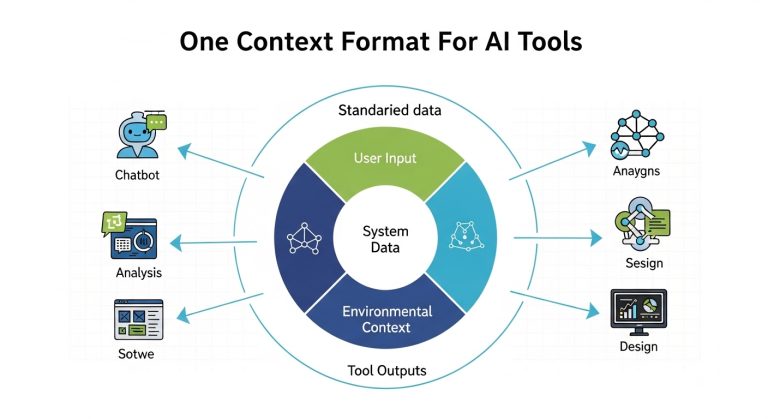
FAF architecture begins with an instruction layer that defines system behavior and execution rules It separates user input from system logic ensuring clarity and control This structure allows AI models to interpret commands consistently and produce predictable outputs across different development scenarios and environments reliably
Context Memory Blocks
Context memory blocks store reusable information that persists across interactions within AI systems These blocks reduce redundancy and improve continuity allowing developers to maintain shared knowledge efficiently They play a critical role in supporting long term context retention and improving system intelligence across workflows globally
Role Segmentation System
Role segmentation ensures that AI systems distinguish between system developer and user instructions This hierarchy improves clarity and prevents conflicting commands from affecting outputs It enables structured decision making and ensures that each instruction type is processed according to its defined priority level correctly enforced
Dynamic Variables System
Dynamic variables enable flexible context structures that adapt to runtime inputs Developers can define placeholders that are replaced during execution improving reusability and efficiency This capability reduces manual effort and supports scalable AI workflows across different applications and environments in modern systems globally at scale
Validation Engine Layer
Validation engine layers ensure that all context inputs meet predefined structural and syntactic rules before processing This reduces errors prevents malformed data from entering AI systems and improves overall stability Developers benefit from safer execution environments and more predictable system behavior across applications consistently reliably
Automation Benefits
Workflow Acceleration
FAF accelerates AI powered workflows by reducing manual context handling and improving data flow efficiency Developers can focus on core logic while automation manages repetitive tasks This leads to faster execution improved productivity and reduced delays across software development pipelines and environments consistently at scale
Repetitive Task Elimination
Repetitive task elimination improves efficiency by removing redundant manual processes in AI development workflows FAF enables automation of context handling reducing developer workload and minimizing human error This creates smoother operations and allows teams to allocate resources to higher value engineering activities efficiently globally optimized
Automation Driven Optimization
Automation driven optimization enhances AI system performance by continuously refining context usage and workflow execution FAF supports intelligent adjustments that improve efficiency over time Developers benefit from reduced manual tuning and more adaptive systems that respond effectively to changing requirements and operational conditions dynamically efficiently
Error Reduction Mechanisms
Error reduction mechanisms in FAF minimize inconsistencies in AI context handling by validating inputs and ensuring structured data flow This reduces system failures improves reliability and enhances overall workflow stability Developers experience fewer disruptions and more predictable outcomes across development environments consistently globally reliably safely effectively
Scalable Automation Systems
Scalable automation systems allow FAF to handle increasing workload demands without compromising performance These systems adapt dynamically to growing datasets and complex workflows Developers benefit from consistent efficiency improved resource utilization and the ability to maintain performance stability across large scale AI applications efficiently reliably
Collaboration in AI Development Workflows
Shared Context Access
Shared context access enables development teams to work with unified information sources across AI systems FAF ensures that all collaborators access the same structured data reducing miscommunication and improving alignment This strengthens teamwork enhances productivity and supports consistent decision making across projects and environments globally
Cross Team Coordination
Cross team coordination improves efficiency by ensuring that multiple teams working on AI projects share consistent context and objectives FAF reduces duplication of effort enhances communication and aligns workflows across departments This leads to smoother project execution and better overall organizational performance consistently at scale
Knowledge Sharing Framework
Knowledge sharing frameworks in FAF allow developers to distribute contextual information efficiently across teams This improves onboarding reduces knowledge gaps and ensures that all members have access to relevant insights It strengthens collaboration and accelerates learning within AI development environments consistently across global distributed systems
Communication Efficiency Gains
Communication efficiency gains occur when teams operate with standardized context formats that reduce ambiguity in AI workflows FAF improves clarity in shared information minimizes misunderstandings and enhances collaboration speed This results in more effective teamwork and faster decision making across development projects consistently globally improved
Unified Development Environment
Unified development environments supported by FAF bring together tools data and context into a single structured system This reduces fragmentation improves efficiency and enhances collaboration Developers benefit from smoother workflows better alignment and more consistent AI behavior across all stages of development consistently at scale
Integration in AI Ecosystems
API Level Connectivity
API level connectivity allows FAF to integrate seamlessly with existing AI systems and development tools It ensures structured context flows between services improving interoperability and reducing integration complexity Developers benefit from smoother data exchange and more reliable communication across distributed system architectures efficiently globally reliably
Toolchain Compatibility
Toolchain compatibility ensures that FAF works across multiple development environments and AI platforms without requiring significant modifications This reduces friction during integration improves workflow consistency and allows teams to continue using preferred tools while benefiting from structured context management efficiently globally at scale reliably consistently
Data Flow Optimization
Data flow optimization improves the movement of contextual information across AI systems FAF ensures that relevant data is delivered efficiently to models reducing latency and improving response quality This leads to more accurate outputs and faster decision making in complex development environments globally consistently reliable
System Interoperability
System interoperability enables different AI tools and platforms to work together using standardized context formats FAF bridges gaps between systems allowing seamless communication and coordination This enhances workflow efficiency reduces integration issues and supports scalable AI development across diverse technical environments efficiently globally reliably consistently

Integration Scalability
Integration scalability ensures that FAF can support growing system complexity without reducing performance or reliability It enables organizations to expand AI workflows while maintaining consistent context handling Developers benefit from stable integrations improved efficiency and the ability to scale systems across large infrastructures efficiently reliably
Security and Governance in AI Context Systems
Context Access Control
Context access control ensures that only authorized users and systems can modify or retrieve sensitive AI context information FAF strengthens security by enforcing permissions and access rules This reduces risks of unauthorized changes improves compliance and enhances overall system trustworthiness across development environments globally reliably
Audit Trail Systems
Audit trail systems in FAF track all changes made to AI context structures over time This improves transparency supports compliance requirements and enables teams to review historical modifications Developers gain better visibility into system behavior and can identify issues more efficiently consistently globally reliably accurately
Data Privacy Protection
Data privacy protection ensures that sensitive information within AI context systems is properly isolated and secured FAF implements structured safeguards that prevent unauthorized access and data leakage This strengthens compliance improves user trust and supports secure AI development practices across organizations globally consistently reliably safely
Governance Framework Alignment
Governance framework alignment ensures that FAF supports organizational policies regulatory standards and compliance requirements It provides structured control over AI context usage helping teams maintain accountability This leads to improved transparency reduced risk and stronger alignment with enterprise governance strategies consistently globally reliably securely effectively
Risk Mitigation Strategies
Risk mitigation strategies in FAF reduce potential failures in AI context handling by enforcing validation access control and monitoring systems These measures improve reliability prevent data corruption and ensure stable performance across development environments and production deployments consistently globally reliably securely efficiently accurately safely effectively
Future Impact of FAF in AI Development
Next Generation AI Systems
Next generation AI systems will rely heavily on structured context management to improve reasoning and decision making FAF provides a foundation for scalable context handling enabling smarter models better coordination and more accurate outputs across complex development environments and workflows consistently globally reliably efficiently effectively
Enterprise AI Expansion
Enterprise AI expansion depends on scalable systems that can manage growing complexity across departments FAF supports this growth by standardizing context usage improving integration and ensuring consistent AI performance This enables organizations to scale AI initiatives without losing efficiency or control globally reliably efficiently effectively
Autonomous Workflow Evolution
Autonomous workflow evolution represents the shift toward self managing AI systems that require minimal human intervention FAF enables structured context flow that supports intelligent automation improving decision making reducing manual effort and increasing efficiency across complex development pipelines and distributed systems consistently globally reliably effectively
Intelligent Automation Growth
Intelligent automation growth is driven by improved context management and structured AI workflows FAF enhances automation capabilities by ensuring consistent data flow and reducing errors This allows organizations to build more adaptive systems that improve performance and efficiency over time across various applications globally efficiently
Future Ready Development Ecosystems
Future ready development ecosystems depend on standardized context management systems that ensure scalability and interoperability FAF supports this evolution by enabling consistent AI workflows improving collaboration and reducing complexity This prepares organizations for advanced AI adoption and continuous technological transformation globally reliably efficiently effectively consistently
FAQs
What is FAF in AI development?
FAF is a framework that simplifies AI context management for development teams.
How does FAF improve workflows?
It streamlines context handling and automates processes to improve efficiency.
Is FAF useful for large teams?
Yes it enables scalable collaboration and consistent context sharing across teams.
Does FAF support integration?
Yes it integrates with existing tools and AI development environments easily.
Why is context management important?
It ensures AI systems receive accurate information for reliable outputs.
Conclusion
FAF simplifies AI powered development workflows by organizing context improving collaboration and enabling scalable automation for modern engineering teams It helps organizations reduce complexity increase productivity and ensure consistent AI performance across distributed systems and environments By standardizing context management FAF supports better decision making faster delivery cycles and long term scalability for evolving AI driven applications globally and efficiently