Smarter Development Through FAF Context
Modern software engineering is increasingly driven by artificial intelligence, but the real challenge is not just using AI—it is making AI understand development context in a consistent, structured, and scalable way. FAF context introduces a smarter way of organizing, sharing, and executing contextual information so development teams can build faster, reduce errors, and improve decision-making across complex AI powered systems.
Challenges in Modern AI Driven Development
Overloaded Context in AI Systems
AI models often receive too much unstructured information, which reduces their ability to generate accurate outputs. Developers struggle to balance completeness with clarity, leading to inefficiencies and inconsistent results across workflows and environments in modern engineering pipelines.
Poor Context Reusability
In traditional workflows, context is often recreated for every new project or tool. This duplication wastes time and increases the risk of inconsistencies. Without reusable structures, teams cannot scale development efficiently or maintain long term alignment across systems.
Lack of Structured Decision Inputs
AI systems rely on context to make decisions, but unstructured inputs lead to unpredictable behavior. Developers must manually refine prompts and data formats, which slows down workflows and increases complexity in multi system development environments across teams and projects.
Inefficient Collaboration Between Teams
Different teams often interpret the same context differently, creating misalignment in AI outputs. This leads to duplicated work and communication gaps. Without a unified structure, collaboration becomes inefficient and reduces the overall quality of development outcomes in distributed environments.
Difficulty Scaling Intelligent Systems
As AI systems grow, managing context becomes increasingly complex. Without structured frameworks, scaling leads to inconsistencies and performance degradation. Teams struggle to maintain reliability while expanding functionality across multiple services and platforms in large scale engineering ecosystems.
FAF Context Framework for Smarter Development
Unified Context Structuring
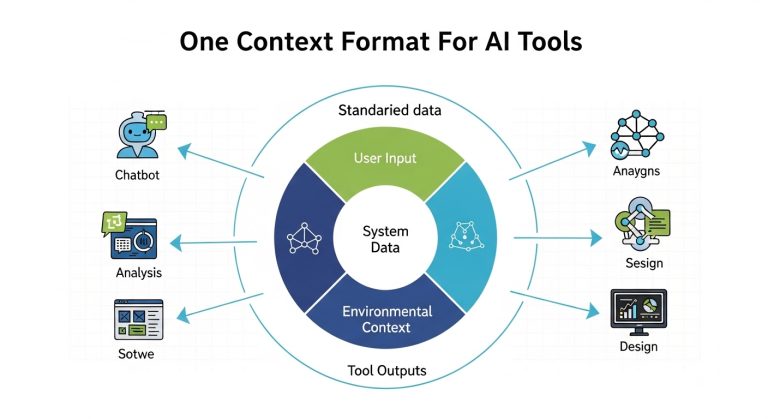
FAF introduces a unified structure that organizes all AI related context into consistent formats. This ensures that information is processed uniformly across tools and systems, improving clarity and reducing misinterpretation in development workflows.
Modular Context Design
Context is broken into reusable modules that can be shared across projects. This modularity allows developers to build scalable systems without recreating context from scratch, improving efficiency and reducing redundancy in AI driven development pipelines.
Intelligent Context Prioritization
FAF assigns priority levels to different types of context so AI systems can focus on the most relevant information. This improves decision quality and reduces noise in outputs, leading to smarter and more reliable system behavior.
Dynamic Context Adaptation
Context in FAF is not static; it adapts based on runtime conditions and system needs. This flexibility allows AI systems to adjust behavior intelligently without requiring manual intervention from developers during execution processes.
Structured Context Validation
Before being used, all context passes through validation rules that ensure consistency and correctness. This reduces errors and ensures that AI systems operate on clean, reliable, and well structured inputs across all workflows.
Benefits of Smarter Development with FAF Context
Improved AI Decision Accuracy
Structured context improves how AI systems interpret information, leading to more accurate and relevant outputs. Developers benefit from better decision support and more reliable system behavior across applications.
Faster Development Cycles
Reusable and modular context reduces the time needed to build and test AI systems. Developers can focus on logic and innovation instead of repeatedly structuring contextual inputs for different tools and environments.
Enhanced System Efficiency
FAF reduces computational and operational overhead by ensuring only relevant context is processed. This leads to more efficient AI systems that perform better under load and scale more effectively across environments.
Better Collaboration Across Teams
Shared context structures ensure that all team members interpret information consistently. This improves communication, reduces misunderstandings, and strengthens collaboration across distributed development teams working on shared AI systems.
Reduced Debugging Complexity
When context is structured and consistent, debugging becomes significantly easier. Developers can quickly identify issues in workflows without dealing with unpredictable variations caused by inconsistent inputs or fragmented system design.
FAF Context Architecture Overview
| Component | Function | Development Impact |
|---|---|---|
| Context Modules | Reusable information blocks | Reduces duplication |
| Priority Engine | Orders contextual relevance | Improves decision quality |
| Validation Layer | Ensures structured input | Increases reliability |
| Adaptation System | Adjusts context dynamically | Enhances flexibility |
| Unified Schema | Standardizes format | Improves consistency |
Role of FAF in Smarter AI Development
Context Driven Intelligence
FAF enables AI systems to make better decisions by structuring context in a way that enhances understanding. This leads to smarter outputs and more predictable system behavior across applications.
Workflow Optimization
Development workflows become more efficient when context is organized and reusable. FAF eliminates unnecessary repetition and ensures smoother transitions between different stages of development.
Scalable System Design
FAF supports scalable architectures by maintaining consistency in context handling. This allows systems to grow without introducing complexity or reducing performance reliability.

Improved AI Human Collaboration
Developers and AI systems work more effectively when context is clear and structured. FAF bridges communication gaps and ensures both humans and machines interpret information consistently.
Continuous Development Enhancement
FAF supports iterative improvement by maintaining structured context across development cycles. This enables continuous optimization of AI systems without disrupting existing workflows.
Security and Governance in FAF Context Systems
Controlled Context Access
Access to context is regulated through structured permissions. This ensures that only authorized users or systems can modify critical information used by AI models.
Transparent Context Tracking
Every change in context is recorded, allowing teams to track modifications and understand system evolution over time. This improves accountability and system transparency.
Data Protection Mechanisms
Sensitive information within context structures is isolated and protected to prevent unauthorized access or leakage during processing and execution.
Compliance Friendly Design
FAF supports regulatory compliance by maintaining structured and auditable context flows that align with organizational and industry standards.
Risk Reduction in AI Operations
By enforcing structured context rules, FAF reduces risks associated with inconsistent or malformed inputs that could lead to unstable AI behavior.
Future of Smarter Development with FAF Context
Evolution of Context Driven AI Systems
Future AI systems will rely heavily on structured context to improve reasoning and decision making capabilities across complex environments.
Growth of Autonomous Development Systems
Autonomous systems will depend on consistent context frameworks like FAF to operate reliably without constant human intervention.
Expansion of Intelligent Workflows
Workflows will become more adaptive and intelligent, using structured context to make real time decisions and optimize performance.
Integration Across AI Ecosystems
FAF enables seamless integration across multiple AI tools and platforms, supporting unified development environments at scale.
Foundation for Next Generation Engineering
FAF context systems provide the structural foundation for future AI engineering practices focused on intelligence, scalability, and consistency.
FAQs
What is FAF context in AI development?
It is a structured approach to organizing AI context for smarter and more efficient development workflows.
How does FAF improve development?
It enhances consistency, reusability, and decision making across AI systems.
Why is structured context important?
It ensures AI systems interpret information correctly and produce reliable outputs.
Can FAF scale with large systems?
Yes it is designed to support scalable and complex AI development environments.
Does FAF reduce development effort?
Yes it minimizes redundancy and simplifies workflow management.
Conclusion
Smarter development through FAF context is achieved by structuring, prioritizing, and validating information across AI systems. It improves accuracy, enhances collaboration, and supports scalable engineering practices. By transforming how context is managed, FAF enables developers to build more intelligent, efficient, and reliable AI systems that perform consistently across all environments.