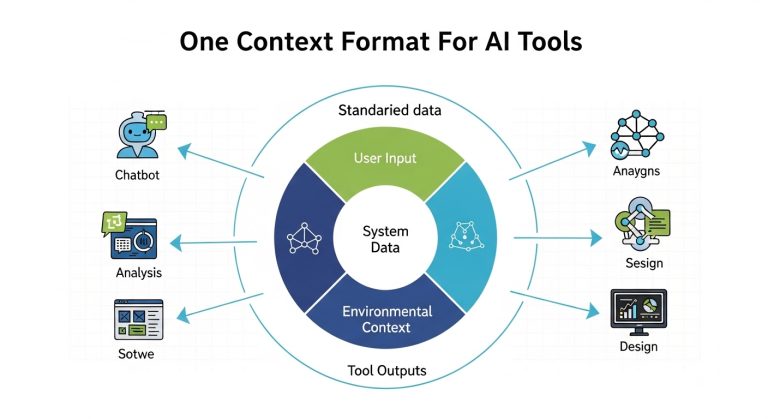

FAF Enables Consistent AI Development
AI development has become a complex process involving multiple models, tools, datasets, and teams working simultaneously across distributed environments. One of the biggest challenges in this ecosystem is inconsistency in context, workflows, and outputs. FAF enables consistent AI development by introducing a structured system that standardizes context handling, improves workflow alignment, and ensures predictable results across all stages of AI engineering.
Challenges in Achieving Consistency in AI Development
Fragmented Development Environments
AI teams often work across different environments such as local systems, cloud platforms, and third party tools. This fragmentation creates inconsistencies in how data and context are handled, leading to unpredictable outputs and misaligned development results across systems.
Varying Prompt Structures
Different developers often design prompts in their own style, which leads to variation in AI responses. Without standardization, models interpret instructions differently, reducing consistency and making debugging more difficult across collaborative projects.
Inconsistent Data Handling
AI systems rely heavily on structured data, but inconsistent formatting or preprocessing methods can lead to unstable results. FAF addresses this by enforcing structured context rules that ensure uniform data handling across workflows.
Lack of Workflow Standardization
When teams follow different workflows, AI outputs become difficult to reproduce. FAF introduces structured workflow alignment that ensures every stage of development follows consistent procedures and context rules.
Difficulty in Scaling Reliable Systems
As AI systems scale, maintaining consistent performance becomes more difficult. Variations in context management and system design lead to unpredictable behavior. FAF helps solve this by providing a scalable and structured foundation for AI development.
FAF Core Consistency Framework
Unified Context Architecture
FAF introduces a unified context architecture that ensures all AI systems receive standardized input. This eliminates ambiguity and ensures consistent interpretation of instructions across different tools and environments.
Structured Prompt Management
Prompts are organized into structured formats that can be reused across projects. This reduces variation in outputs and ensures that AI systems behave consistently regardless of where they are deployed.
Standardized Workflow Layers
FAF defines clear workflow layers that guide how data moves through AI systems. Each layer has specific responsibilities, ensuring consistency from input processing to final output generation.
Context Validation Engine
A validation engine checks all contextual inputs before they are processed by AI models. This prevents malformed or inconsistent data from affecting system behavior and improves reliability.
Reusable Context Modules
FAF enables modular context design where reusable components can be shared across projects. This ensures that consistent logic is applied throughout different AI systems and workflows.
Benefits of FAF for Consistent AI Development
Predictable AI Outputs
By standardizing context and workflows, FAF ensures that AI systems produce predictable and stable outputs. This improves trust and reliability in production environments.
Reduced Development Errors
Consistency in context handling reduces the chances of errors caused by misinterpretation or inconsistent data formatting. Developers can build more stable systems with fewer debugging cycles.
Improved Collaboration Efficiency
When all team members follow the same structured approach, collaboration becomes smoother. FAF ensures that developers, data scientists, and engineers work with aligned processes and shared context.
Faster Debugging and Optimization
Consistent systems are easier to debug because behavior remains predictable. FAF helps teams quickly identify issues and optimize performance without dealing with unpredictable variations.
Scalable AI System Design
FAF provides a structured foundation that scales easily across large systems. As projects grow, consistency is maintained without increasing complexity or operational overhead.
FAF Consistency Architecture Overview
| Component | Function | Consistency Impact |
|---|---|---|
| Context Layer | Standardizes input structure | Ensures uniform interpretation |
| Workflow Engine | Defines execution stages | Maintains process alignment |
| Validation System | Checks input correctness | Prevents inconsistencies |
| Prompt Framework | Organizes AI instructions | Reduces output variation |
| Module System | Enables reuse | Ensures system-wide uniformity |
Role of FAF in AI Workflow Stability
Stable Model Behavior
FAF ensures that AI models behave consistently by controlling how context is delivered. This reduces randomness and improves reliability across different deployments.
Controlled Data Flow
Data flows through structured layers in FAF, ensuring that every transformation follows predefined rules. This prevents inconsistencies caused by unstructured processing.
Unified Development Standards
FAF introduces shared standards for AI development teams, ensuring that everyone follows the same rules and practices, leading to consistent system behavior.
Predictable Integration Outcomes
When integrating multiple AI tools, FAF ensures consistent communication between systems. This reduces integration errors and improves system stability.

Continuous Consistency Monitoring
FAF supports monitoring mechanisms that detect inconsistencies in workflows and context usage, allowing teams to maintain long term stability.
Security and Governance in Consistent AI Systems
Controlled Context Management
FAF ensures that only authorized users can modify AI context structures. This prevents unauthorized changes that could disrupt system consistency.
Auditability of AI Workflows
All changes in FAF systems are tracked, making it easier to audit workflows and ensure that consistency standards are maintained over time.
Compliance Ready Structure
FAF supports regulatory compliance by maintaining structured and traceable AI development processes that meet governance requirements.
Risk Reduction Mechanisms
By enforcing structured context handling, FAF reduces risks associated with inconsistent AI behavior and unpredictable outputs.
Secure System Alignment
Security policies are embedded within the FAF structure, ensuring that consistency does not come at the cost of system protection or data integrity.
Future of Consistent AI Development with FAF
Evolution Toward Standardized AI Systems
Future AI systems will rely heavily on standardized frameworks like FAF to ensure consistency across global development environments.
Expansion of Large Scale AI Ecosystems
As AI ecosystems grow, FAF will help maintain uniform behavior across distributed systems and large enterprise infrastructures.
Integration with Autonomous AI Agents
Consistent context systems will be essential for autonomous AI agents, and FAF provides the structure needed for reliable agent coordination.
Advancement in Predictive AI Behavior
With consistent context handling, AI systems will become more predictable, improving trust and usability across industries.
Foundation for Next Generation AI Engineering
FAF lays the groundwork for future AI engineering practices that prioritize stability, structure, and consistency across all development stages.
FAQs
What is FAF in AI development?
FAF is a structured framework that improves consistency in AI development workflows.
How does FAF ensure consistency?
It standardizes context, workflows, and data handling across AI systems.
Why is consistency important in AI systems?
Consistency improves reliability, predictability, and performance in AI outputs.
Can FAF scale with large AI projects?
Yes it is designed to maintain consistency even in large and complex systems.
Does FAF reduce development errors?
Yes it minimizes errors caused by inconsistent context and workflows.
Conclusion
FAF enables consistent AI development by standardizing context management, improving workflow alignment, and ensuring predictable system behavior. It reduces fragmentation, enhances collaboration, and supports scalable AI architectures. By maintaining uniformity across tools, teams, and systems, FAF helps organizations build reliable and efficient AI solutions that perform consistently across all environments.