
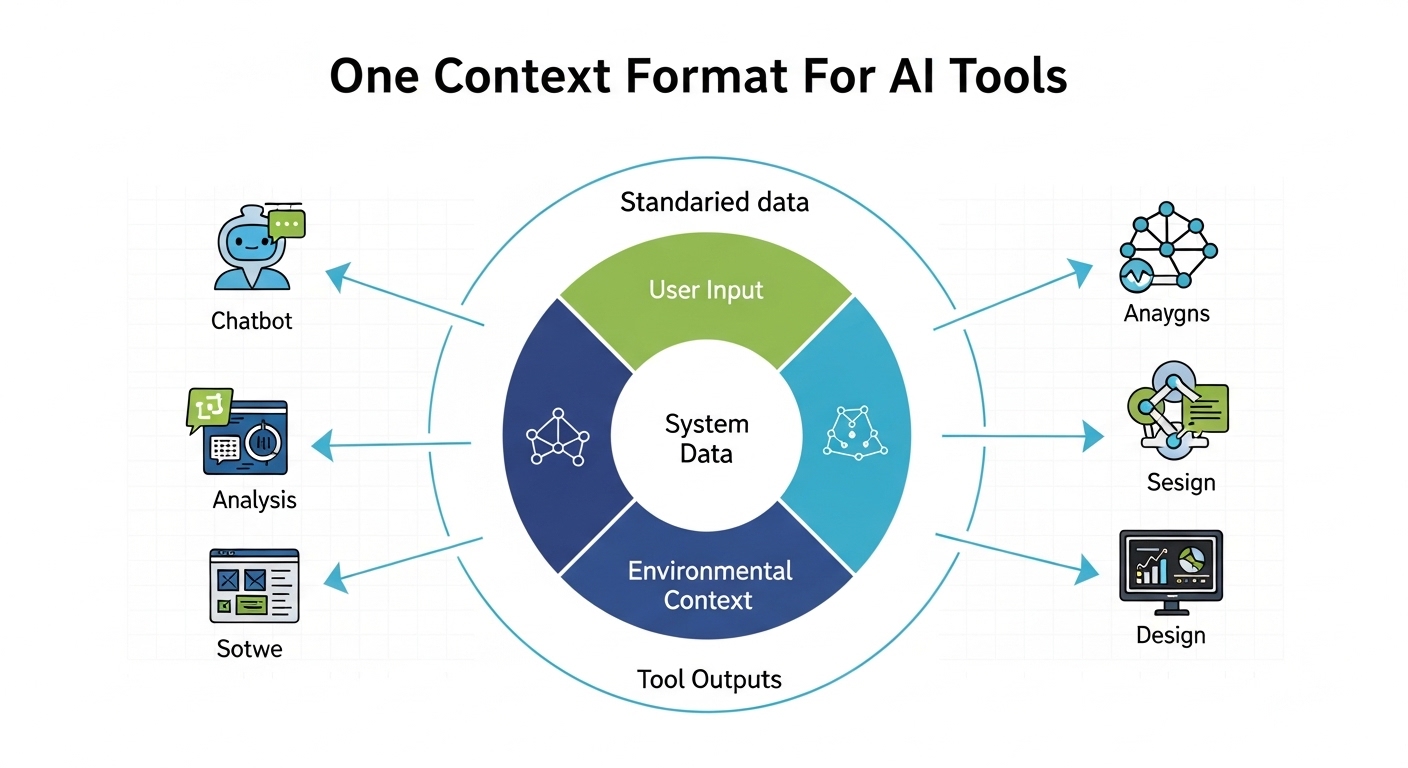
One Context Format For AI Tools
AI development is rapidly expanding across tools, platforms, and workflows, but one of the biggest challenges remains inconsistent context representation. Every tool often interprets prompts, metadata, and instructions differently, which leads to fragmentation and unpredictable outputs. A One Context Format for AI Tools aims to solve this problem by creating a unified standard that allows all AI systems to understand, process, and share context in a consistent and structured way across environments.
Fragmentation in AI Tool Ecosystems
Inconsistent Prompt Structures
Different AI tools require different prompt formats, making it difficult for developers to reuse context across systems. This inconsistency increases development effort and reduces portability. A unified context format removes this barrier by standardizing how instructions are written and interpreted.
Tool Specific Context Rules
Many AI platforms enforce their own rules for handling context, which limits interoperability. Developers must often rewrite or adapt the same information for each tool. A single context format eliminates this duplication and improves workflow efficiency.
Data Interpretation Differences
AI tools may interpret identical inputs in different ways due to varying internal models and parsing logic. This leads to inconsistent outputs and unpredictable behavior. A standardized context format ensures that all systems interpret information more reliably and consistently.
Workflow Duplication Problems
Without a shared format, teams often recreate context structures for each tool in their stack. This duplication wastes time and introduces errors. A unified format reduces redundancy and streamlines development processes across multiple AI environments.
Integration Complexity in Multi Tool Systems
Modern AI systems often involve multiple tools working together. Without a standard format, integrating these tools becomes complex and error-prone. A One Context Format simplifies integration by providing a common language for all systems.
Structure of One Context Format
Unified Instruction Layer
The instruction layer defines clear and consistent commands for AI systems. It separates system rules, user input, and developer instructions into structured segments. This ensures predictable behavior across different tools and platforms.
Standard Metadata Schema
Metadata such as roles, constraints, and objectives is organized into a unified schema. This helps AI systems understand context more effectively and ensures that important details are not lost during processing.
Modular Context Blocks
Context is divided into reusable blocks that can be shared across tools and workflows. These modular blocks improve flexibility, reduce redundancy, and allow developers to build scalable AI systems more efficiently.
Dynamic Variable System
The format supports dynamic placeholders that can adapt to different inputs at runtime. This enables developers to create reusable templates that work across multiple AI tools without rewriting context.
Validation and Consistency Rules
Built-in validation ensures that context follows a consistent structure before being processed. This reduces errors, improves reliability, and ensures that AI tools receive clean and structured input data.
Benefits of a Unified Context Format
Improved Cross Tool Compatibility
A unified format allows AI tools to work together seamlessly. Developers can move context between platforms without rewriting it, improving efficiency and reducing integration friction.
Faster Development Workflows
Standardized context reduces setup time and simplifies prompt engineering. Developers can focus on building features instead of adapting context for each tool, resulting in faster development cycles.
Reduced Operational Complexity
Managing multiple context formats increases complexity. A single format simplifies workflows, reduces confusion, and makes AI systems easier to maintain and scale across teams.
Consistent AI Outputs Across Platforms
When all tools interpret context in the same way, output consistency improves significantly. This helps organizations build more reliable and predictable AI systems across different environments.
Easier Collaboration Between Teams
A shared context format enables better collaboration between developers, data scientists, and product teams. Everyone works with the same structure, reducing misunderstandings and improving alignment.
One Context Format Architecture Overview
| Component | Function | Impact |
|---|---|---|
| Instruction Layer | Defines system behavior | Ensures consistency |
| Metadata Schema | Organizes context details | Improves understanding |
| Modular Blocks | Reusable context units | Increases efficiency |
| Variable Engine | Supports dynamic inputs | Enhances flexibility |
| Validation System | Ensures structure integrity | Reduces errors |
AI Tool Integration Scenarios
Multi Platform AI Development
Developers working across multiple AI platforms benefit from a unified format that allows seamless context transfer. This reduces rewriting effort and improves workflow continuity.
API Driven AI Systems
In API based systems, a standardized context format ensures consistent communication between services. It simplifies integration and improves reliability in distributed architectures.
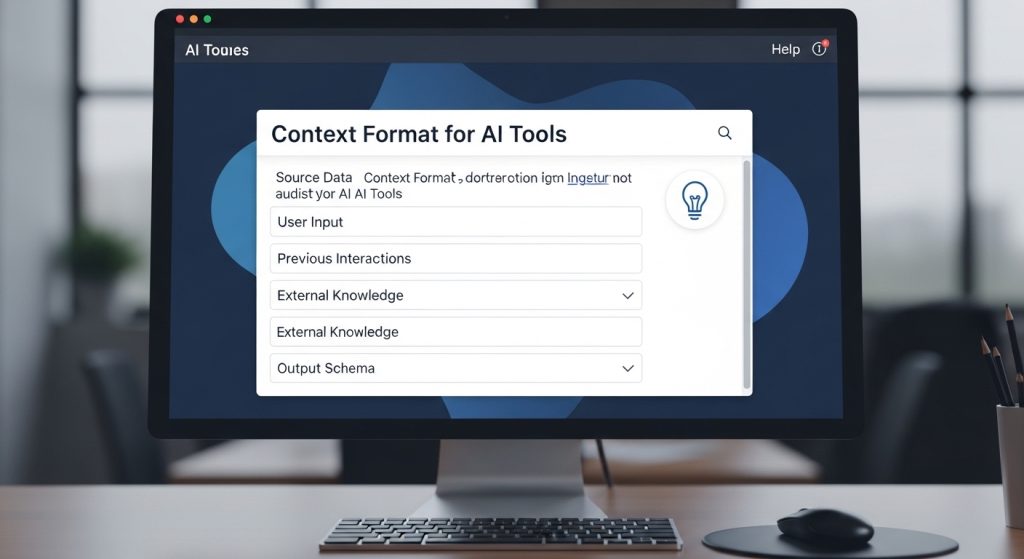
Enterprise AI Ecosystems
Large organizations often use multiple AI tools simultaneously. A single context format helps unify these systems, improving coordination and reducing operational fragmentation.
Automated Workflow Pipelines
Automation pipelines depend on structured inputs. A unified context format ensures that each stage of the pipeline receives consistent and reliable information.
Multi Model AI Environments
When multiple models are used together, consistent context becomes essential. A standardized format ensures that all models interpret data in the same way.
Security and Governance Considerations
Controlled Context Access
Access to context can be regulated using structured permission layers. This ensures that sensitive information is only accessible to authorized systems or users.
Audit Friendly Structure
A unified format allows all context changes to be tracked and reviewed. This improves transparency and supports compliance requirements in regulated industries.
Data Isolation Mechanisms
Sensitive data can be separated into controlled blocks within the context structure. This prevents accidental exposure and improves security.
Governance Alignment
A standardized format helps organizations enforce consistent governance policies across all AI tools and systems, improving compliance and accountability.
Risk Reduction in AI Systems
Structured and validated context reduces the risk of unexpected AI behavior caused by malformed or inconsistent inputs.
Future of Unified Context Standards
Industry Wide Standardization
As AI ecosystems grow, a universal context format could become an industry standard, enabling seamless interoperability across tools and platforms.
Expansion of AI Interoperability
Future AI systems will require deeper integration across models and tools. A unified format will be essential for enabling this level of interoperability.
Growth of Multi Agent Systems
AI agents working together require consistent context sharing. A standard format ensures smooth coordination between multiple autonomous systems.
Evolution of Intelligent Workflows
Workflows will become more intelligent and automated, relying on structured context to make decisions and adapt dynamically.
Foundation for Scalable AI Ecosystems
A unified context format provides the structural foundation needed to build scalable, efficient, and future ready AI ecosystems.
FAQs
What is a One Context Format for AI tools?
It is a standardized structure for representing AI context across different tools and platforms.
Why is it important?
It improves consistency, interoperability, and efficiency in AI development workflows.
Can it work across all AI platforms?
Yes it is designed to be model and tool agnostic for maximum compatibility.
How does it improve development speed?
It reduces the need to rewrite context for different tools and systems.
Is it useful for enterprise systems?
Yes it helps large organizations unify their AI ecosystems and workflows.
Conclusion
A One Context Format for AI Tools creates a unified foundation for managing AI context across platforms, models, and workflows. It reduces fragmentation, improves consistency, and simplifies integration in complex AI ecosystems. By standardizing how context is structured and shared, it enables developers to build more scalable, reliable, and efficient AI systems that can adapt to future technological demands.